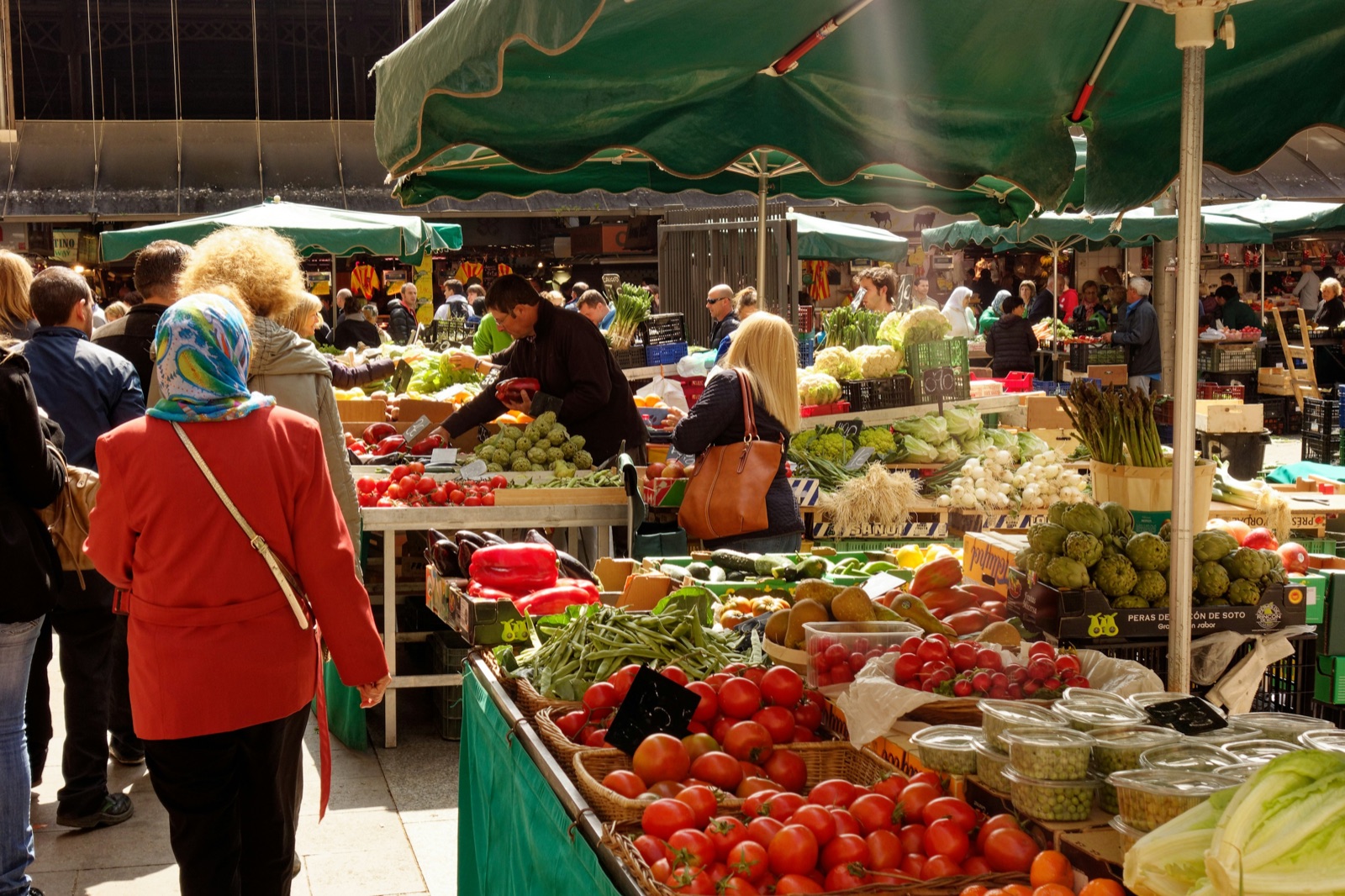
Barcelona's markets are most revealing before lunch, when shopping is still part of the daily rhythm and the counters are being worked rather than merely admired. From PDG15, the most natural beginning is not the famous Boqueria but a neighbourhood market within the Eixample grid. It makes for a quieter, more useful introduction to the city's relationship with produce, flowers and the ritual of stopping for something small.
This route can remain a compact local morning or extend towards the old city. There is no need to collect every market in one outing. Choose two, leave space for coffee, and let the walk between them do some of the work: balconies, bakeries and the changing grain of Barcelona become as memorable as anything bought at a stall.
Begin in the Eixample
Mercat de la Concepció
Mercat de la Concepció is the right first stop because it belongs to the neighbourhood around PDG15. Its iron-and-brick market hall has served the Eixample since the nineteenth century, but the useful details are contemporary: fresh-food counters, plants and flowers, and places to pause without turning breakfast into an event. Walk the aisles once before buying anything. Look for what is abundant, ask a stallholder what is ready to eat, and consider taking fruit, cheese or something prepared back to the apartment. The market's proximity makes this easy rather than performative.
Plan your visitMercat del Ninot
If you want to understand how a city market adapts without losing its purpose, continue west to Mercat del Ninot. It is a polished, practical hall used for household shopping, with fresh produce and places to eat woven into the same building. The walk crosses the Eixample rather than retracing your steps, which is part of its appeal. This is a good place to stop for a savoury bite, particularly if breakfast at La Concepció was light. Keep the order modest: market mornings work better as a sequence of tastes than one large sitting.
Plan your visitContinue into the old city
Mercat de Santa Caterina
For a more architectural finale, make your way to Santa Caterina. Its rippling, coloured roof announces the building before you step inside, while the market beneath it remains rooted in food. The contrast with the measured Eixample halls is immediate: the streets tighten, the city becomes older and the market feels embedded in the lanes around it. Browse the produce counters, then step outside to see how the roof meets the surrounding buildings. Santa Caterina pairs naturally with a later walk through the Born, but resist squeezing in a museum simply because it is nearby.
Plan your visitMercat de Sant Antoni
Sant Antoni is the alternative extension when you would rather explore a broader neighbourhood than enter the old city. The restored market occupies an entire block and brings fresh food, clothing and specialist trading into one civic structure. On Sundays, the book and collectors' market changes the character of its perimeter, so the choice of day matters. Afterward, continue through the surrounding streets rather than immediately taking transport home; cafés and independent shops make this a market visit that opens onto a neighbourhood rather than ending at the doors.
Plan your visitWhat to bring home
A market purchase does not need to become a full cooking project. A few tomatoes, good fruit, bread, cheese and something from a prepared-food counter can make an apartment lunch that feels distinctly of the city. Ask before photographing people or individual stalls, carry a small reusable bag, and buy from the counter if you have spent time asking questions. The exchange is part of the experience.
Before you go
Market trading patterns vary by day, and individual stalls do not necessarily follow the building's full opening schedule. Check each market's official site on the morning you plan to visit, especially around public holidays. For the calmest experience, go earlier, avoid arriving with a rigid list, and choose no more than two principal stops. Fresh products should be stored promptly when you return to the apartment.